concept 03 of 12
Why your bill jumps:
the cache.
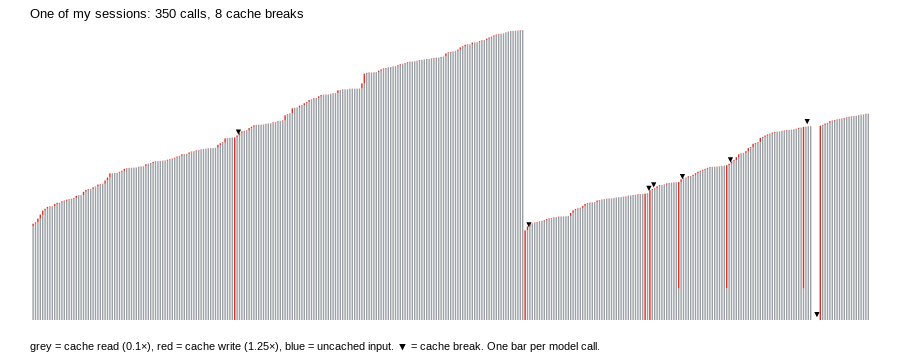
A normal turn writes about 1K tokens to the cache. Switch models halfway, and the whole session gets written again: about 115K.
You are here: Feel it → next: See it
You switch models halfway through a long session. How many tokens get written to the cache on the next message?
Episode 3 premieres soon
Meanwhile, try the lab below. It shows the same thing with your own numbers.
Read the transcript instead
"Same chat. Same question. One message wrote about one thousand tokens to the cache. The next wrote one hundred and fifteen thousand. Nothing about the question changed. So what did?" …
The book page: what the cache keeps, and the 5 things that break it.
- A cached read costs 0.1×. Writing to the cache costs 1.25×.
- The order is fixed: tools → system prompt → messages. Change anything early and everything after it is written again.
- The API cache lasts 5 minutes by default. Claude Code behaves like 1 hour.
- Each model has its own cache. Switching models means writing everything again.
Lab 12: watch the cache work, then break it.
Runs right here in your browser with your own key. Three cells, real numbers from the API, under one cent.
Stays in this tab only: it is never saved or sent to us, only to api.anthropic.com. The model is Claude Haiku 5.5, the cheapest, and the whole lab costs well under one cent.
system = briefing_pack      # ~1,500 tokens: an AGENTS.md and team rules
cache_control = "ephemeral" # mark it cacheable
ask("What's the test command?")   # call 1
ask("What's the test command?")   # call 2
Guess first: on call 2, how many tokens are read from the cache?
Change one thing, then send the same question again:
Find the cache breaks in your own Claude Code history. It reads only the usage numbers, never your prompts.
Coming soon as a one-line command. My own run found 23,608 calls and 125 cache breaks.
Try this tomorrow
Myth vs fact
"Switching to a bigger model halfway is free."
✅ It writes the whole session to a new cache.
More myths and tips are coming.